HR Dive
The future of HR services: How AI is making human expertise more valuable
The future of HR services is evolving. CoAd explores where AI and human expertise fit in.


As part of an ongoing public legal saga, the Trump administration previously concluded that San José State University violated Title IX.
Read ArticleThe future of HR services is evolving. CoAd explores where AI and human expertise fit in.

The ruling rejected plaintiffs’ constitutional arguments but said that the directive only pertains to conduct that is “already prohibited by federal law.”

Norfolk Southern declared the employee in his mid-60s unfit for duty despite multiple medical clearances and successful completion of two physical evaluations, he alleged.
The agency learned of at least 100 women negatively affected by the work environment at California-based Il Fornaio’s multiple locations, an EEOC attorney said.

When CEOs were asked which senior leaders they planned to replace, CHROs accounted for 12% of responses.

More than 2 in 3 recruiters told TestGorilla they spend an hour or more manually checking a candidate’s credentials.

Current technology isn’t keeping up with the needs of HR professionals, according to Employ.

Here’s a roundup of numbers from the last week — including how many jobs robots physically can complete on a cost-competitive basis.
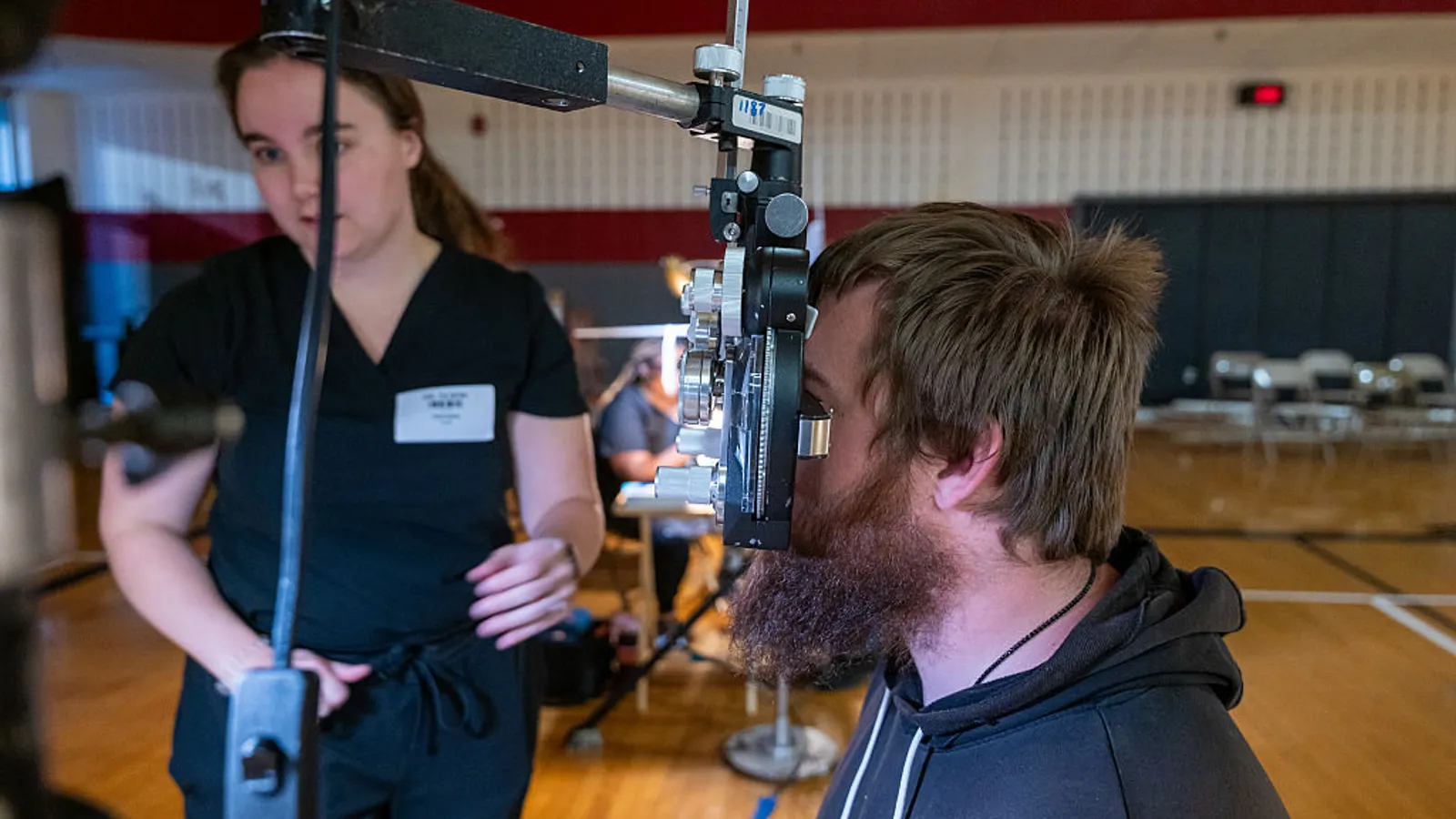
While workers have reported higher well-being since 2019, WTW found financial concerns are straining workers’ access to medical care.
This analysis takes a first look at how hospitals are reporting prices under updated federal hospital price transparency requirements that took effect in January 2026.
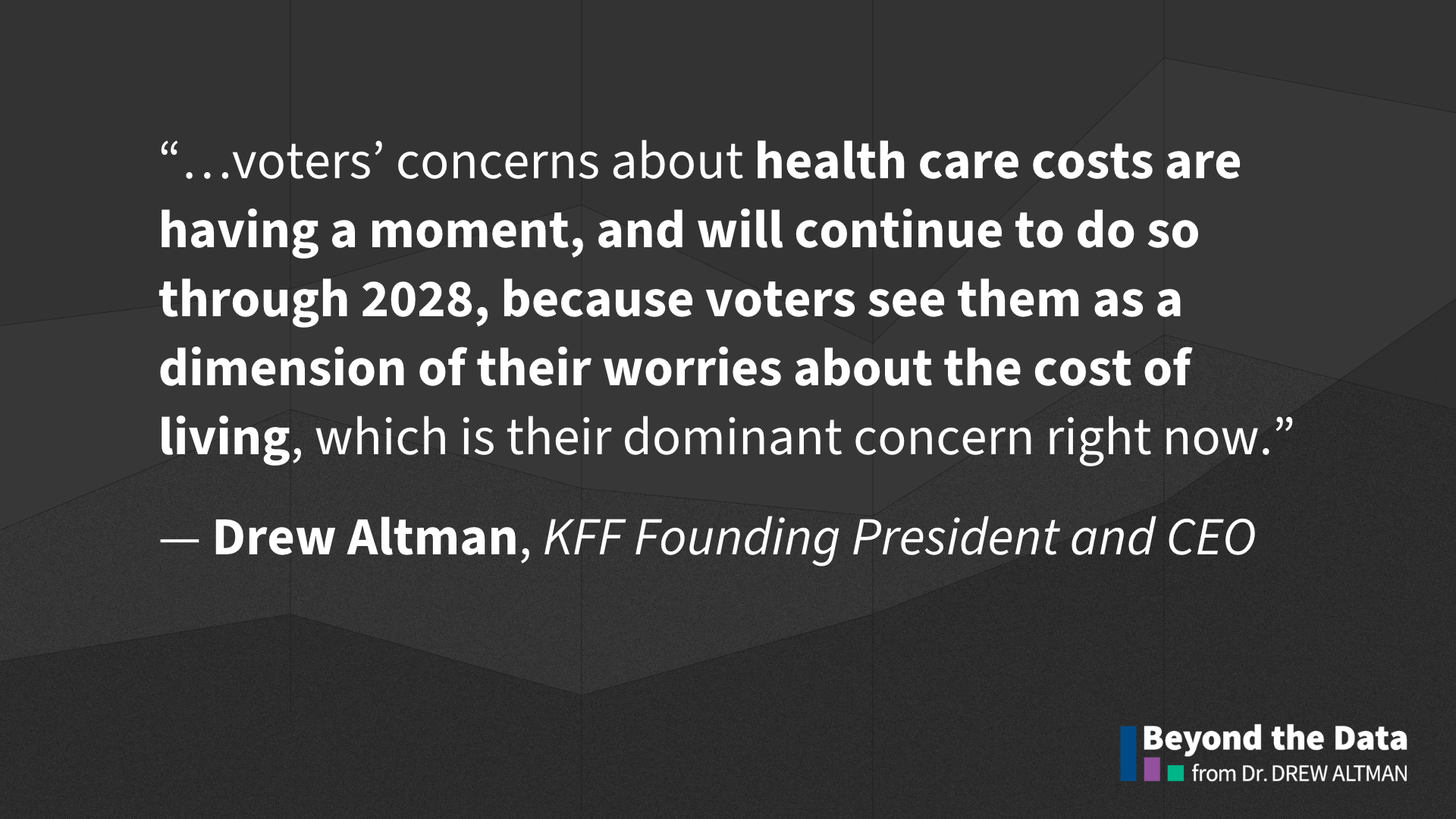
In a new column, President and CEO Dr. Drew Altman says health care costs are playing a significant role in the midterms as one dimension of voters’ concerns about cost of living, and explains why pollsters, analysts, and candidates should look at it that way, and not as a separate voting issue. He writes, “The ‘issue’ that matters most in this election is cost of living and the cost of…

Just a month away from the midterm elections, affordability worries continue to top the public’s list of midterm election issues, with health care costs and gas costs tying as the top economic concern, KFF’s new Health Tracking Poll finds. Voters overall trust Democrats more than Republicans to handle the cost of health care and the cost of living.
With the 2026 midterms about a month away, health care costs remain tied with gas as voters’ top midterm concerns and the Democrats hold a clear edge over the Republicans Party on who voters trust to handle many top electoral issues, including the cost of health care and the cost of living. Two-thirds of U.S. adults now favor Medicare-for-all, a new high in KFF Polling, but support shift…
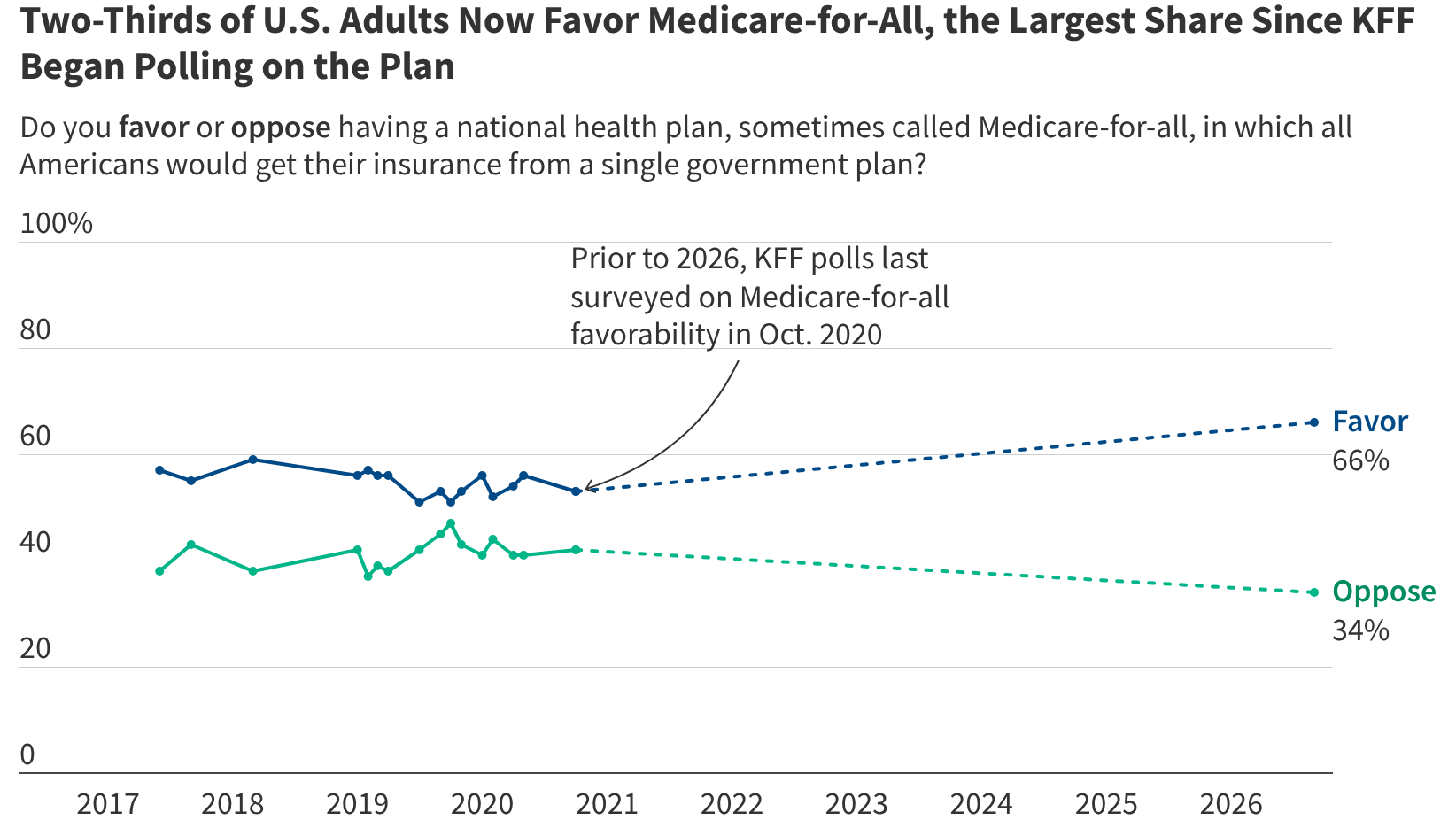
This chart pack summarizes KFF polling data on public opinion on Medicare-for-all and other national health plan proposals. The latest update finds that two-thirds of the public supports Medicare-for-all, while support changes drastically as respondents hear arguments from proponents and critics.
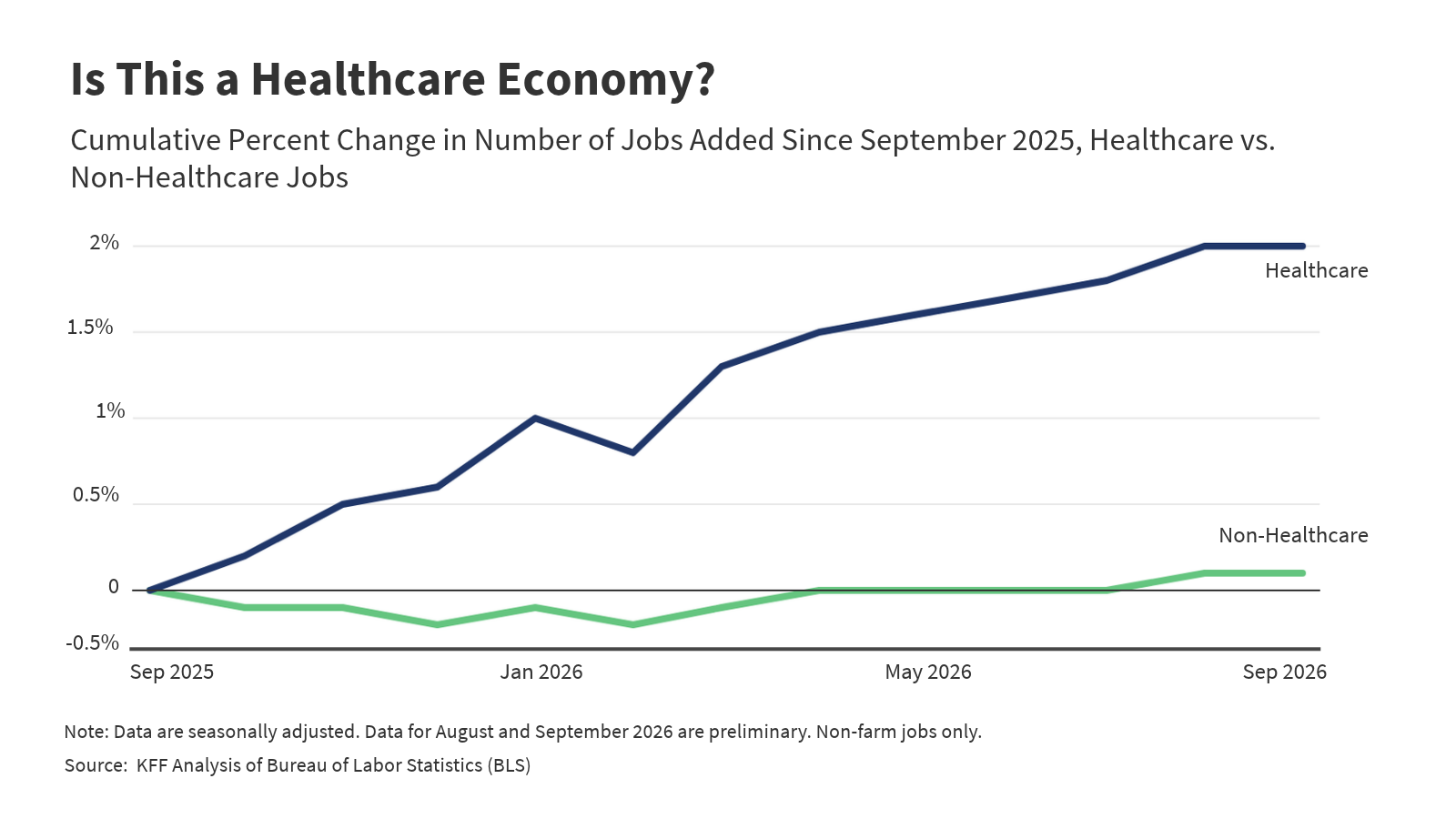
This analysis examines recent jobs growth in health care and how it compares to the rest of the economy. Health care employment has grown faster than other sectors of the economy, with jobs in physician offices, hospitals, outpatient care centers, home health, and other settings increasing over the past year even as the rest of the job market plateaued.
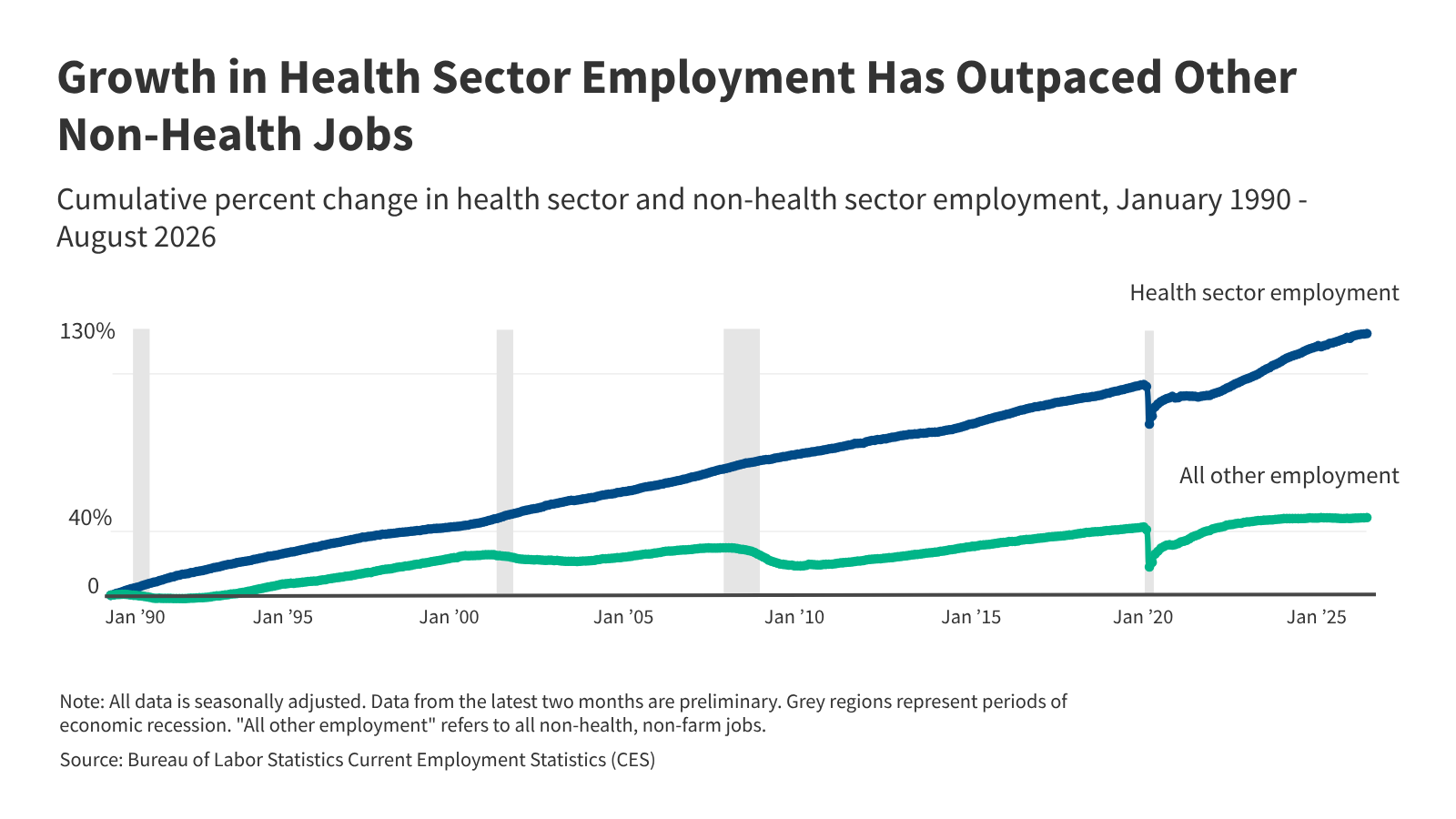
Health care employment continues to grow even as hiring across other sectors has plateaued. The health sector added nearly 379,000 jobs over the past year, a 2% increase, compared with just 0.2% growth in other non-farm employment, with outpatient care among the fastest-growing health care settings.
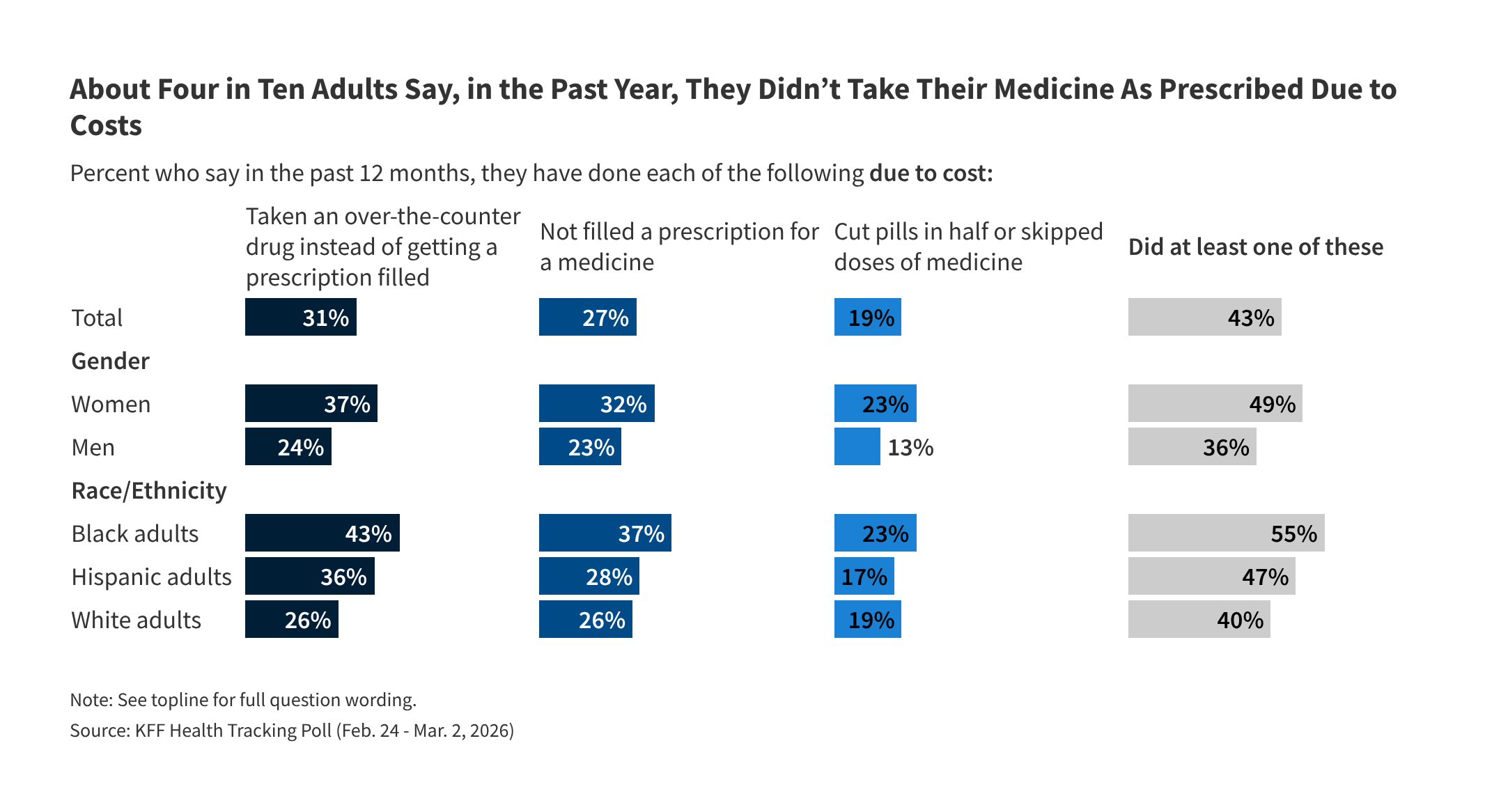
This data note reviews our recent polling data that finds that many Americans struggle to afford many aspects of health care, including disproportionate shares of uninsured adults, Black and Hispanic adults and those with lower incomes.
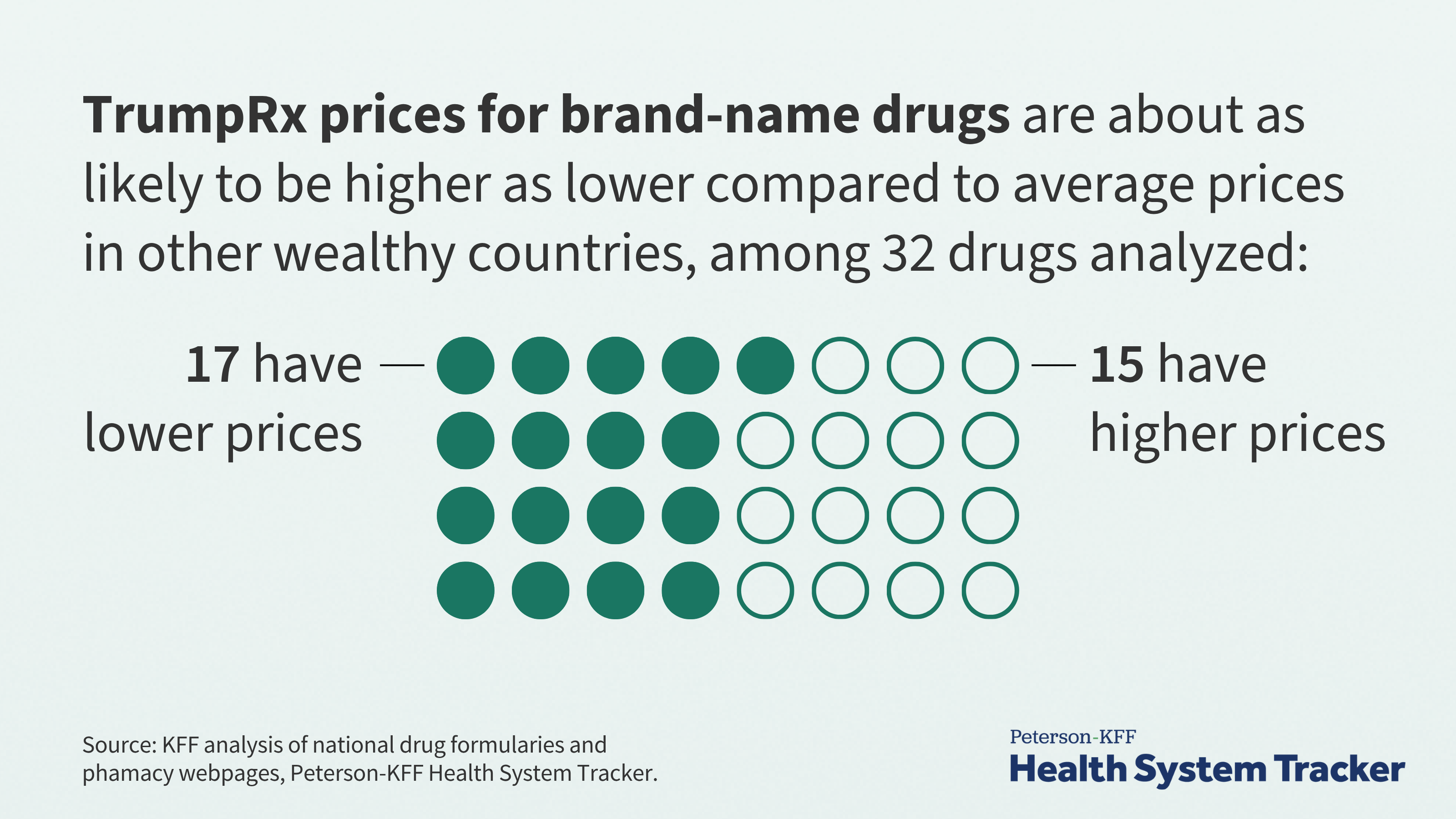
TrumpRx prices for brand-name drugs are about as likely to be higher as lower compared to average prices in other wealthy countries, according to an analysis that compares 32 brand-name drugs (without generics or biosimilars) on the TrumpRx website with publicly available prices in one or more of 11 OECD member countries.
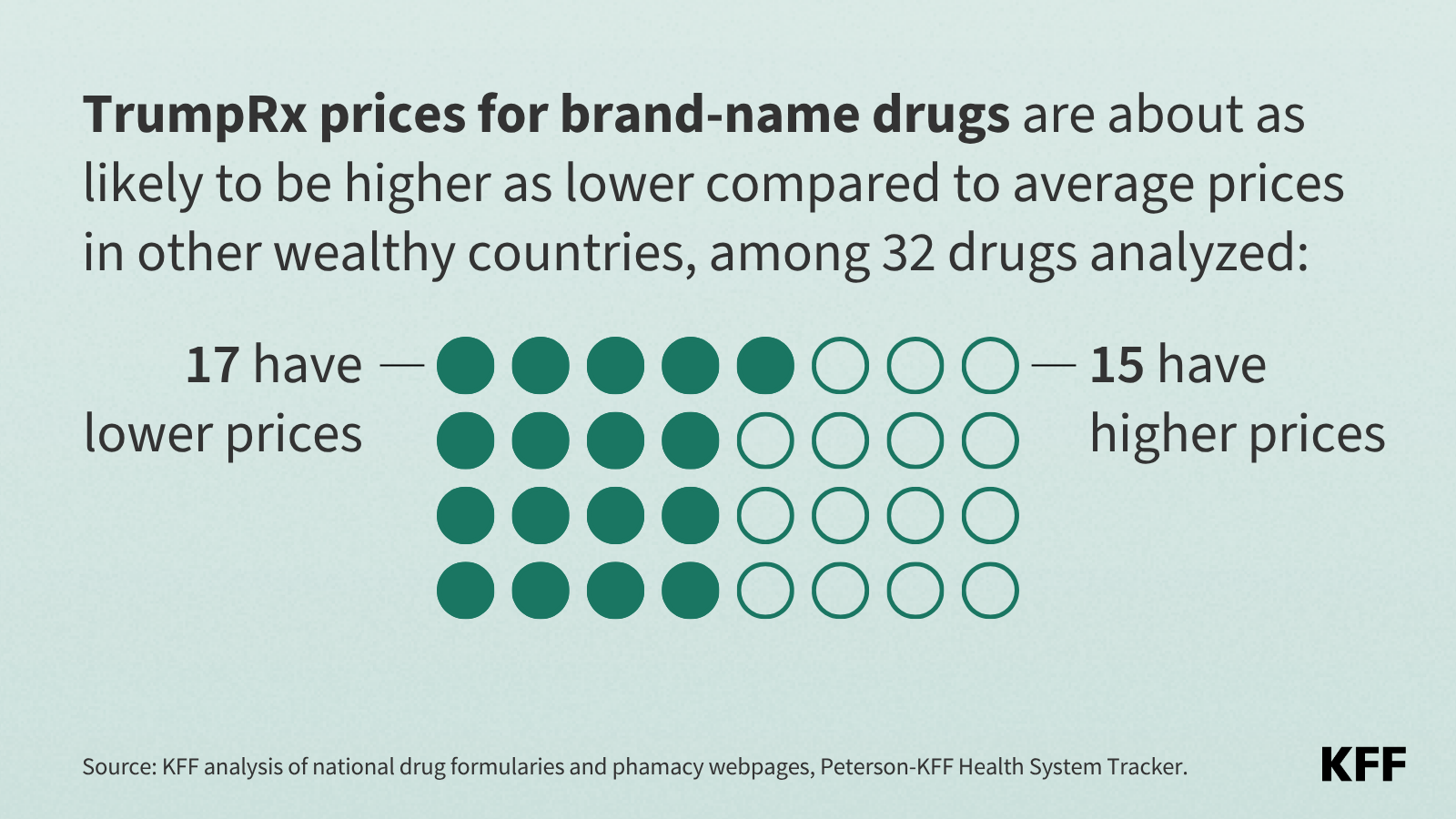
Consumers who buy brand-name prescription drugs without an available generic or biosimilar at the prices available through the new TrumpRx website are about as likely to pay more as pay less for those drugs relative to the publicly listed prices available in other comparatively wealthy countries, a new KFF analysis finds.
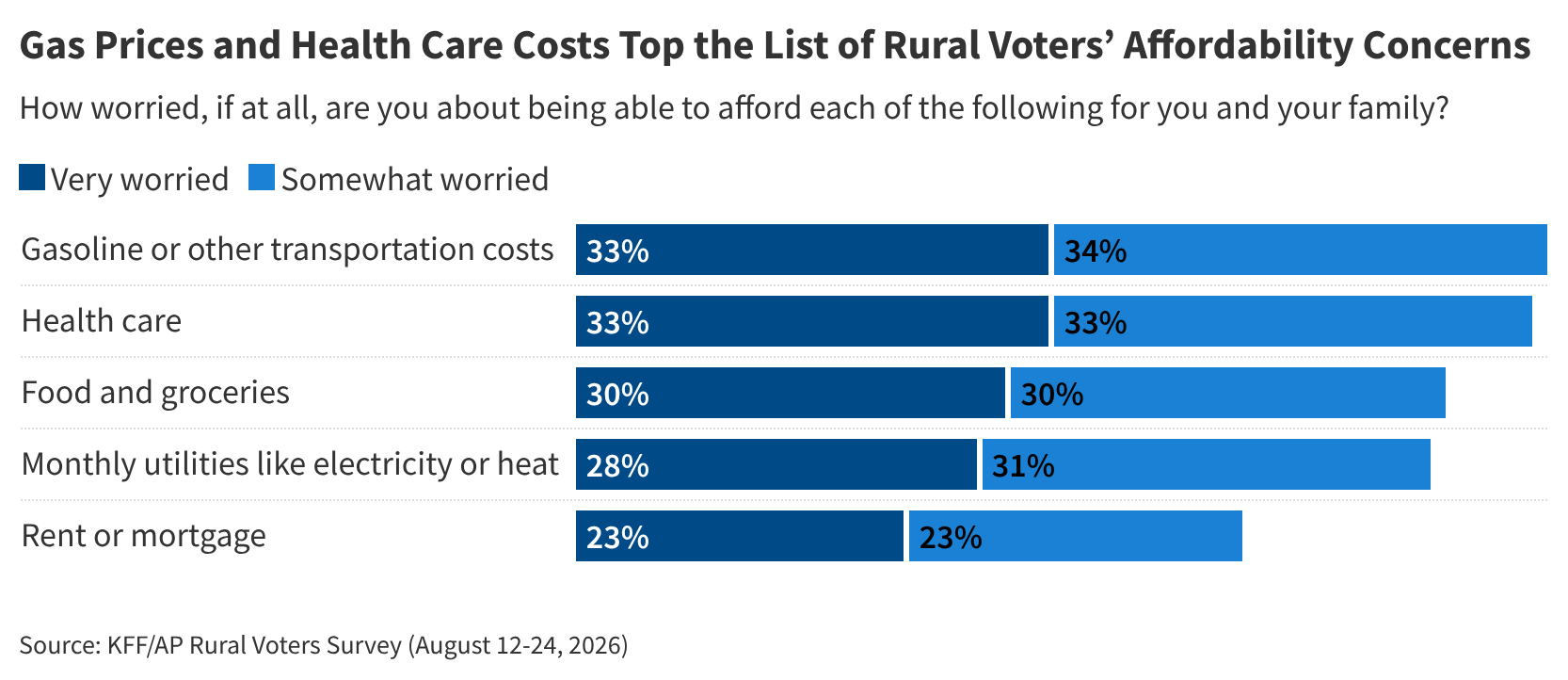
Rural voters’ frustrations about the cost of living in their community are growing and appear to be chipping away at Republicans’ enthusiasm to vote as the midterm elections near, a new KFF/AP Survey of Rural Voters finds.
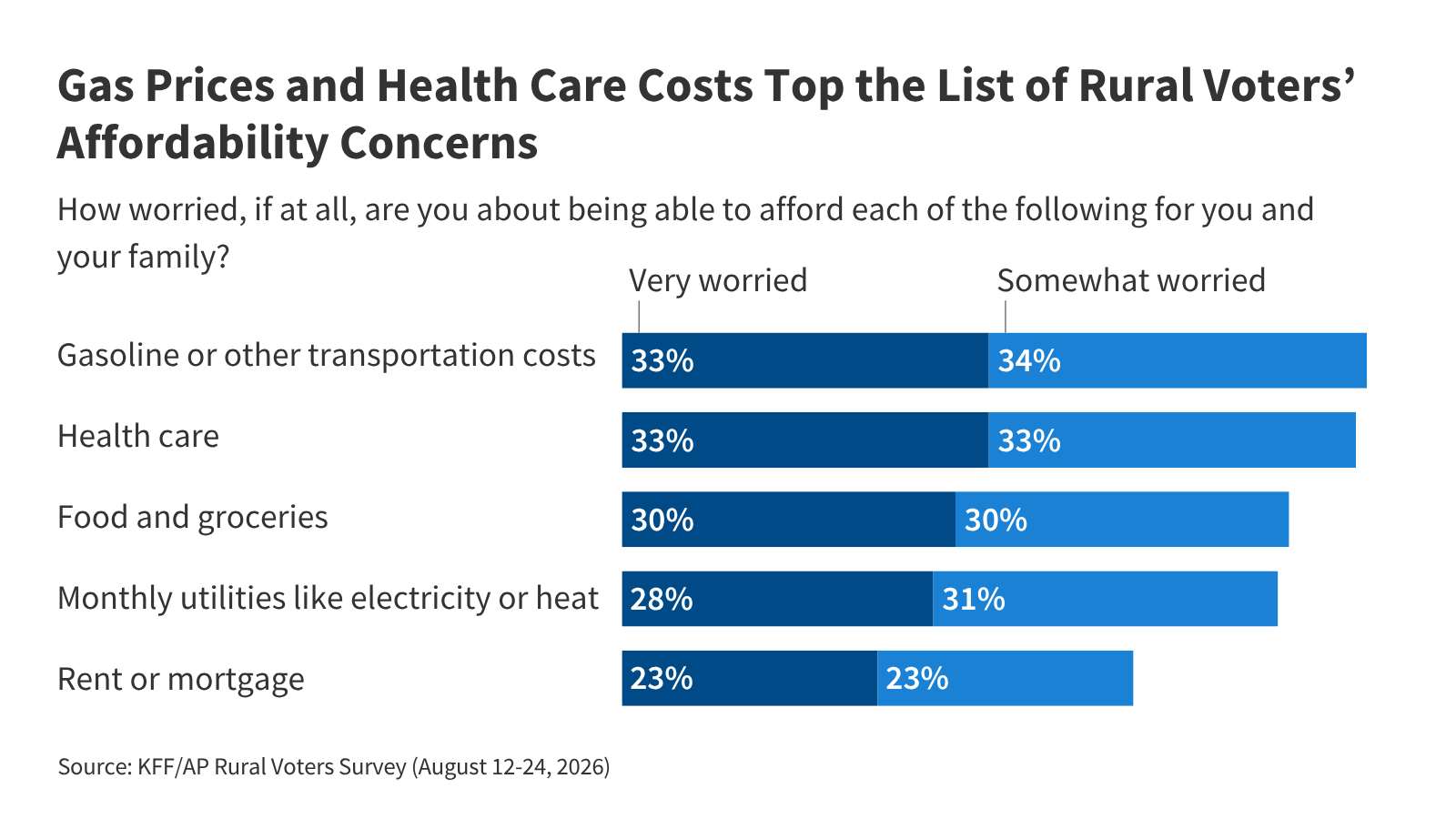
The KFF/AP Rural Voters Survey examines the views and political priorities of voters living in rural areas across the United States ahead of the 2026 midterm elections. The survey gauges rural voters' top election issues, growing struggles with cost of living and health care costs, as well as views on the Trump administration's health care policies.
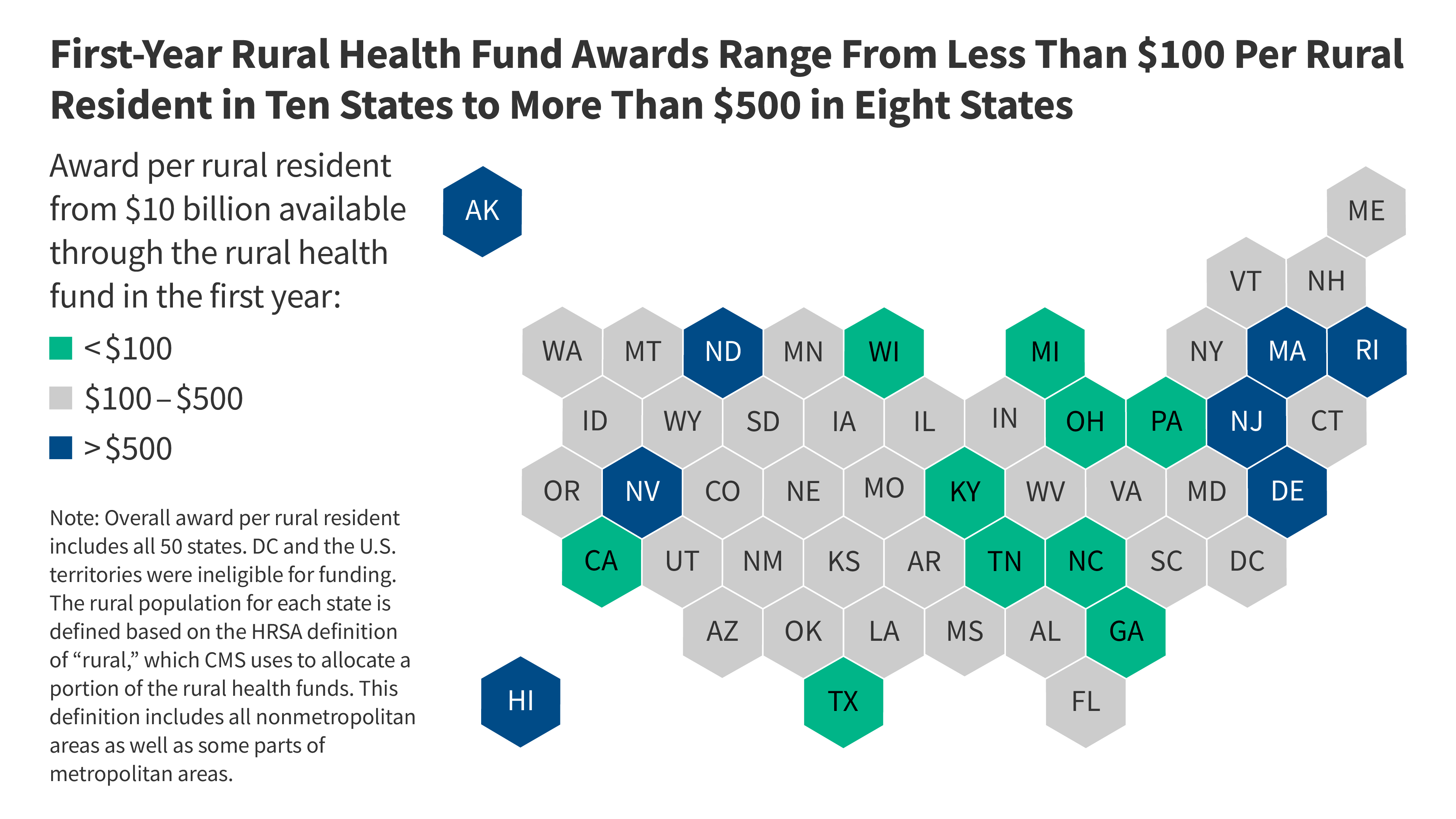
The 2025 budget reconciliation created the Rural Health Transformation Program, which will award $50 billion in state grants over a five-year period. This brief provides an overview of the program, describing its structure, how funds can be used, how funding compares to Medicaid spending reductions in the reconciliation law, and how the funds are being distributed across and within states.
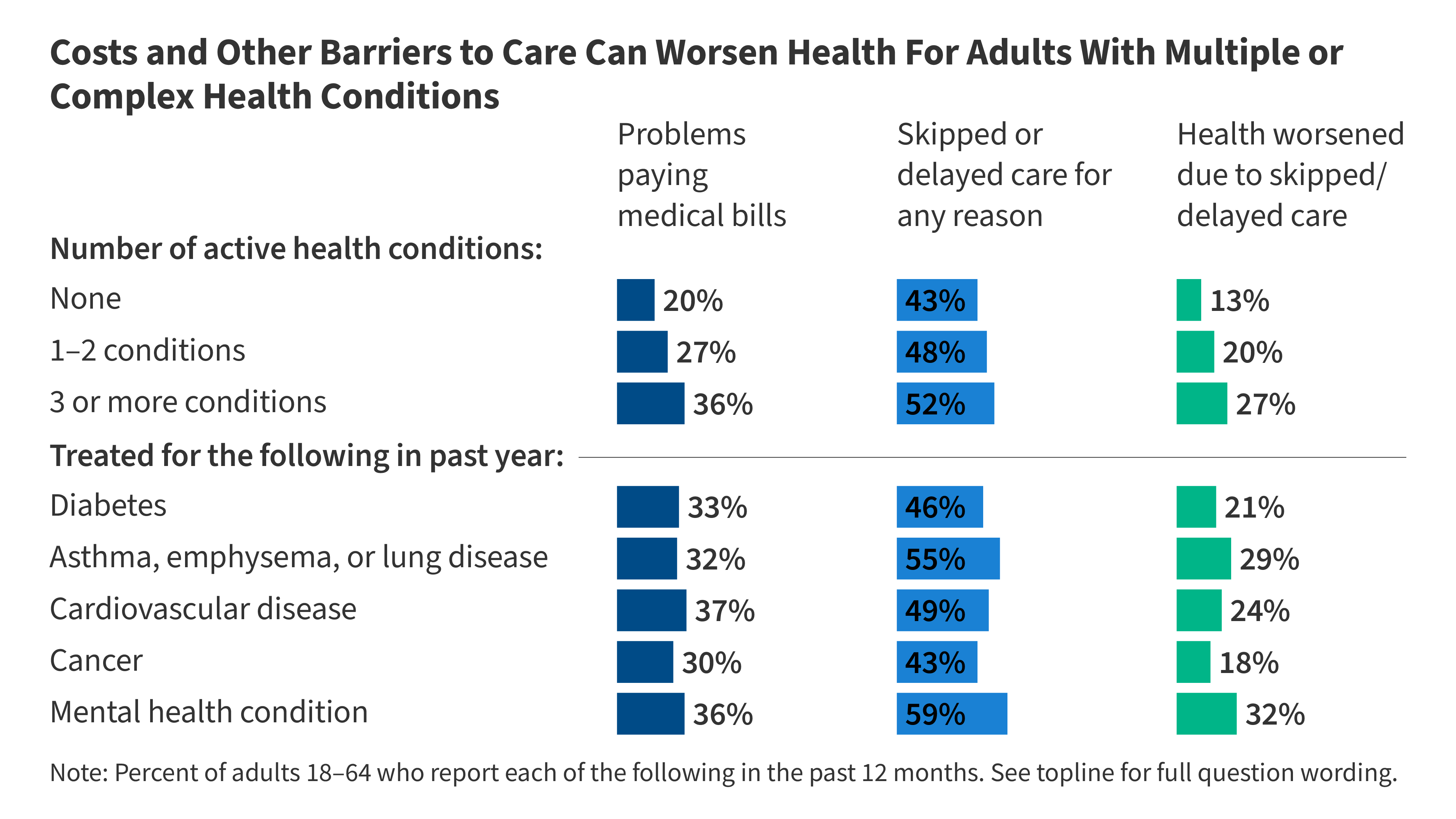
Adults with multiple or complex health conditions, who already face unique physical and mental challenges, commonly struggle to pay their medical bills and access needed care and medication—challenges that fall hardest on uninsured adults, according to a KFF survey of more than 25 thousand adults. “If the first obligation of a health care system is to take care of the sick, we are failin…
In a new column, Dr. Drew Altman, KFF's Founding President and CEO, previews findings about the chronically ill uninsured from a large KFF survey of 25,000 Americans focusing on the cost and access challenges facing the chronically ill, which will be released tomorrow. He writes: “There are more than enough needs to go around in American health care, but if I had to pick the one group th…

Political leaders on both sides point fingers at health insurers for high costs and patient frustrations. How much blame do insurers, in fact, deserve for our health system’s problems? In this three-part video series, KFF’s Larry Levitt considers this question and the complicated answer, exploring what’s driving rising insurance premiums, whether insurers provide value, and who we trust…

Costly health insurance premiums are straining employers and consumers alike. But, it’s underlying health care spending, especially for hospital care, that’s driving costs. KFF’s Larry Levitt looks at how hospital consolidation and employer demands for broad networks affect insurers’ ability, and willingness, to control prices in this first video of a three-part series on health insurers…

Insurers take a cut of every premium dollar for overhead and profit. The question isn't just whether they profit, but also whether we’re getting value in return. KFF’s Larry Levitt breaks down how much goes to administrative costs and profit and how that varies across private insurance markets and Medicare, and considers what a Medicare-for-all system, which would be operated by the gove…

Deciding what health care gets covered largely falls to health insurers, and it’s not a role that wins them many fans. A KFF poll finds prior authorization is the single biggest burden insured adults say they face beyond cost.
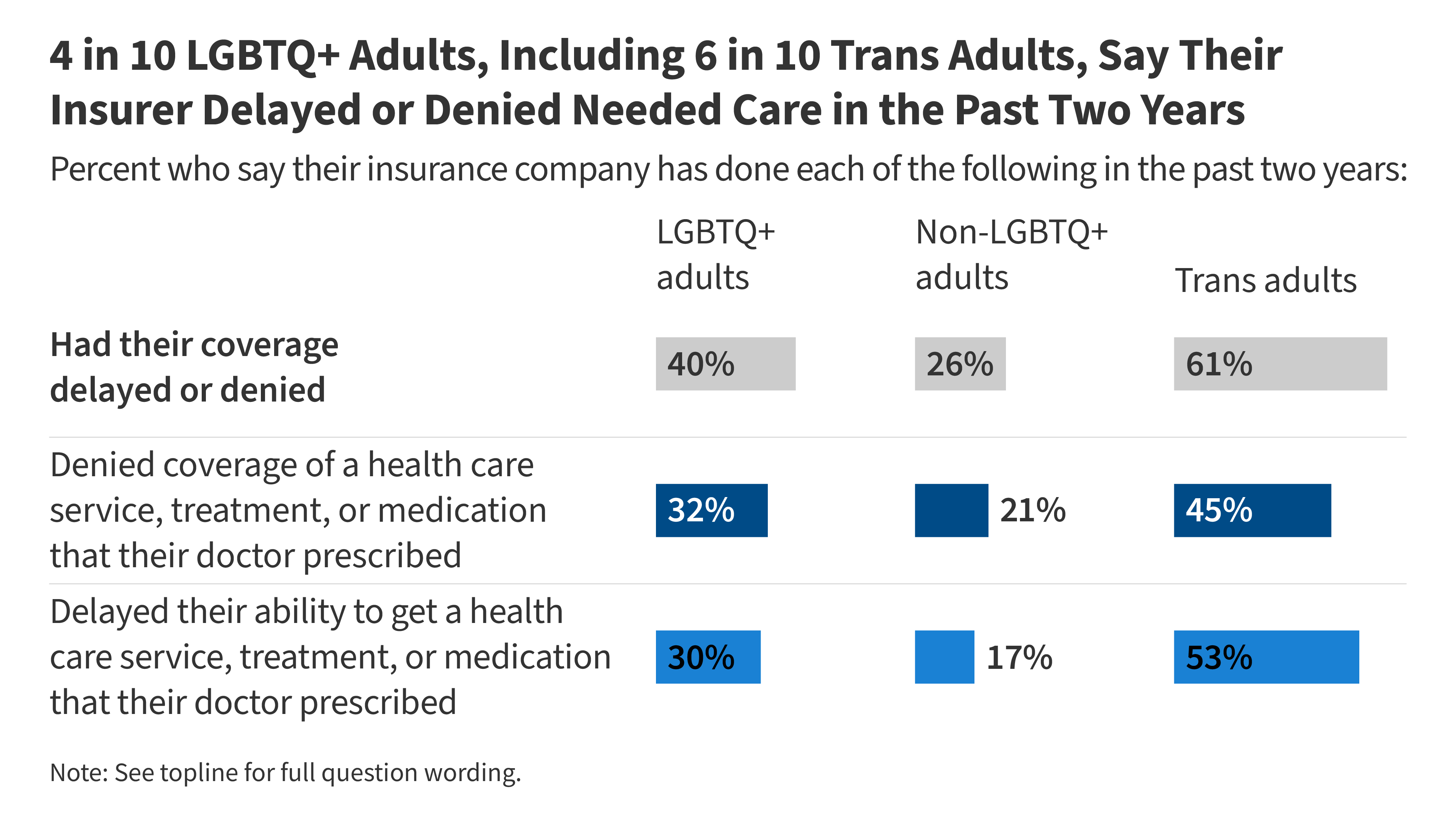
This report examines how LGBTQ+ adults' experiences with health care costs and access compare to those of non-LGBTQ+ adults, finding that LGBTQ+ adults face significantly greater challenges affording and accessing care.